The German Shepherd
At Xitalia, our dogs are of West German Show Lines - a line we are particularly drawn to for its balance of structure, temperament, trainability, versatility, and overall breed type.
We appreciate the line’s ability to produce dogs that are not only beautiful and functional, but also capable of thriving as loyal family companions while still retaining the intelligence, confidence, and working ability the German Shepherd Dog is so respected for.
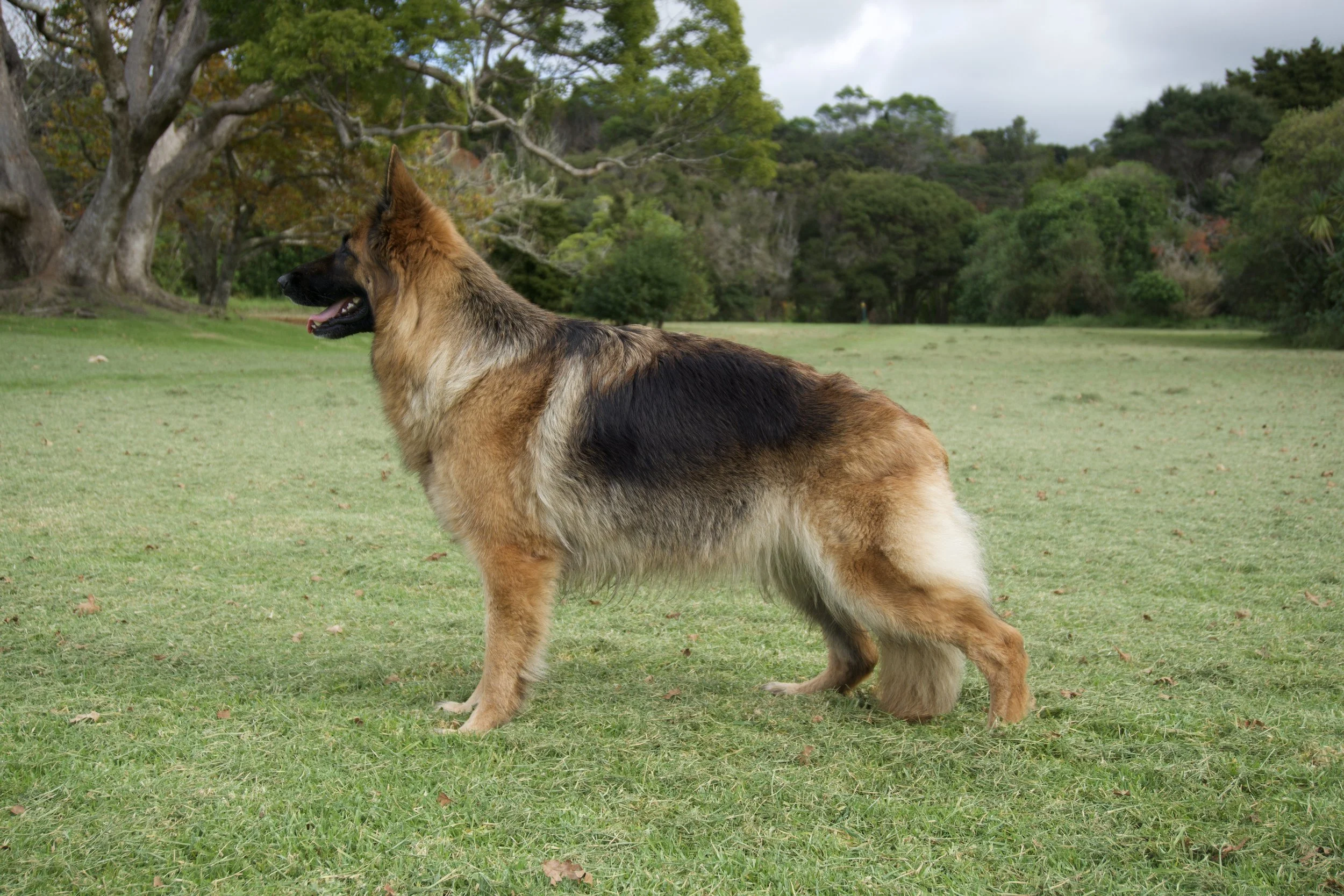
Hanshi Young and Reckless “Ruby”
-
The Beginning
The German Shepherd Dog is a relatively modern breed, formally established in 1899 by Captain Max von Stephanitz, who envisioned the ultimate working dog - intelligent, athletic, loyal, and highly trainable. While attending a dog show in Germany, von Stephanitz discovered a herding dog named Horand von Grafrath, whose sound temperament, structure, and working ability embodied everything he believed the breed should represent. Horand became the first officially registered German Shepherd Dog and the foundation of the breed we know today.
From the very beginning, the German Shepherd was never intended to be bred purely for appearance - however their good looks are certianly an added bonus! Von Stephanitz prioritised utility, stable temperament, intelligence, endurance, and the ability to work closely alongside people. As traditional herding roles declined, the breed quickly transitioned into police, military, service, and protection work - proving itself to be one of the most versatile working breeds in the world.
-
One Breed, Many Expressions
One of the most unique things about the German Shepherd Dog is the diversity that exists within the breed itself. Over generations, different breeding philosophies, working demands, and regional influences have shaped distinct lines of German Shepherds - each with their own strengths, characteristics, and style of dog. While they may differ in appearance, temperament, structure, or drive, they all share the same foundation and purpose the breed was originally developed for over a century ago.
Some people are naturally drawn to the balance and versatility often seen in the West German Show Line, while others admire the intensity and drive found within the various working lines. No single line is universally “better” than another - the right fit ultimately comes down to the individual dog, the experience and expectations of the owner and the lifestyle the dog is expected to live. Understanding these differences allows future owners to make more informed decisions and better appreciate the depth, history, and versatility of this remarkable breed.
-
A Breed With Purpose.
The German Shepherd Dog was developed with functionality at the centre of every breeding decision. Sound structure, athletic movement, intelligence, courage, and stable temperament were all considered essential qualities - not optional extras. Max von Stephanitz strongly believed that “utility is the true criterion of beauty,” meaning a dog should first and foremost be healthy and capable of performing the work it was bred for.
Over the past century, responsible breeders around the world have continued working to preserve and improve these qualities while adapting the breed to modern life.
Today, German Shepherds continue to excel across an enormous range of roles including sport, service/therapy work, search and rescue, police and military work, detection, obedience and perhaps best of all family companionship. -
Different Lines.
As the German Shepherd Dog spread throughout the world, different breeding philosophies, working requirements, and regional preferences gradually shaped distinct “lines” within the breed. While all remain German Shepherd Dogs, these lines can differ quite significantly in terms of structure, movement, temperament, working drive, and overall appearance depending on the goals behind the breeding program.
The most recognised lines today include West German Show Lines, West German Working Lines, DDR/East German Working Lines, Czech Working Lines, and American Show Lines. Each was developed with different goals in mind, whether that be maintaining strong working ability, preserving breed type and structure, or producing dogs suited for specific environments and tasks. Understanding these differences can help future owners better understand the type of German Shepherd that may suit their lifestyle and expectations.
-
West German Show Lines
West German Show Lines remain heavily influenced by the original German breeding system and the SV (Society for the German Shepherd Dog) breed regulations established in Germany. These dogs are bred with strong emphasis on correct structure, movement, temperament, health testing, and maintaining overall breed type while still preserving working ability and soundness.
When responsibly bred, West German Show Line German Shepherds are known for their balance and versatility. They are capable of succeeding in family homes, sport environments, obedience, and working roles while still retaining the hallmark intelligence, loyalty, confidence, and trainability the breed is known for. Their combination of beauty, functionality, and sound temperament is what continues to make them one of the most recognised and admired German Shepherd types worldwide.
-
Working Lines
Working line German Shepherds - including West German Working, DDR/East German and Czech lines - were developed with stronger emphasis on performance, resilience, drive, and working capability. These dogs were often bred specifically for demanding roles such as military work, police service, protection sports, and border patrol work where endurance, nerve strength, and trainability are essential.
As a result, working line dogs are often highly driven, energetic, athletic, and mentally intense. While incredibly capable and rewarding, these dogs often require experienced ownership, structured training, and ongoing physical and mental stimulation to thrive in a home environment. Their strong work ethic and natural instincts are a reflection of the breed’s original purpose and versatility.
From Foundation to Modern Influence
-
![Black and white photo of a police German Shepherd dog standing on a textured surface, facing left.]()
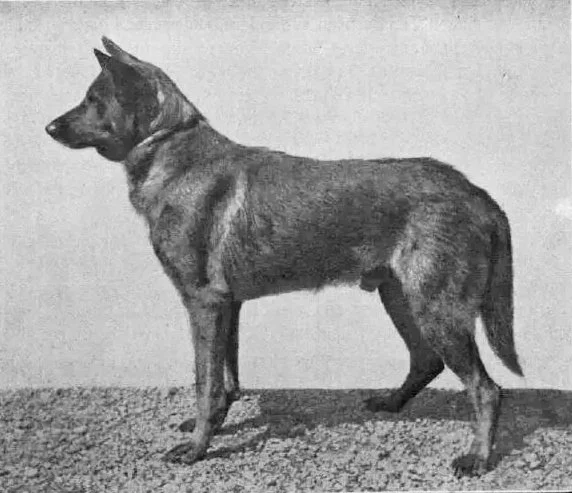
Horand von Grafrath
SZ1
Horand was purchased by Captain Max von Stephanitz, who recognised in him the intelligence, structure, temperament and working ability he believed the breed should represent. Registered as SZ1, Horand became the first officially recognised German Shepherd Dog and remains the foundation dog behind the vast majority of modern German Shepherd pedigrees today. -
![German Shepherd dog sitting on grass, on a leash, with a fence in the background, in black and white.]()
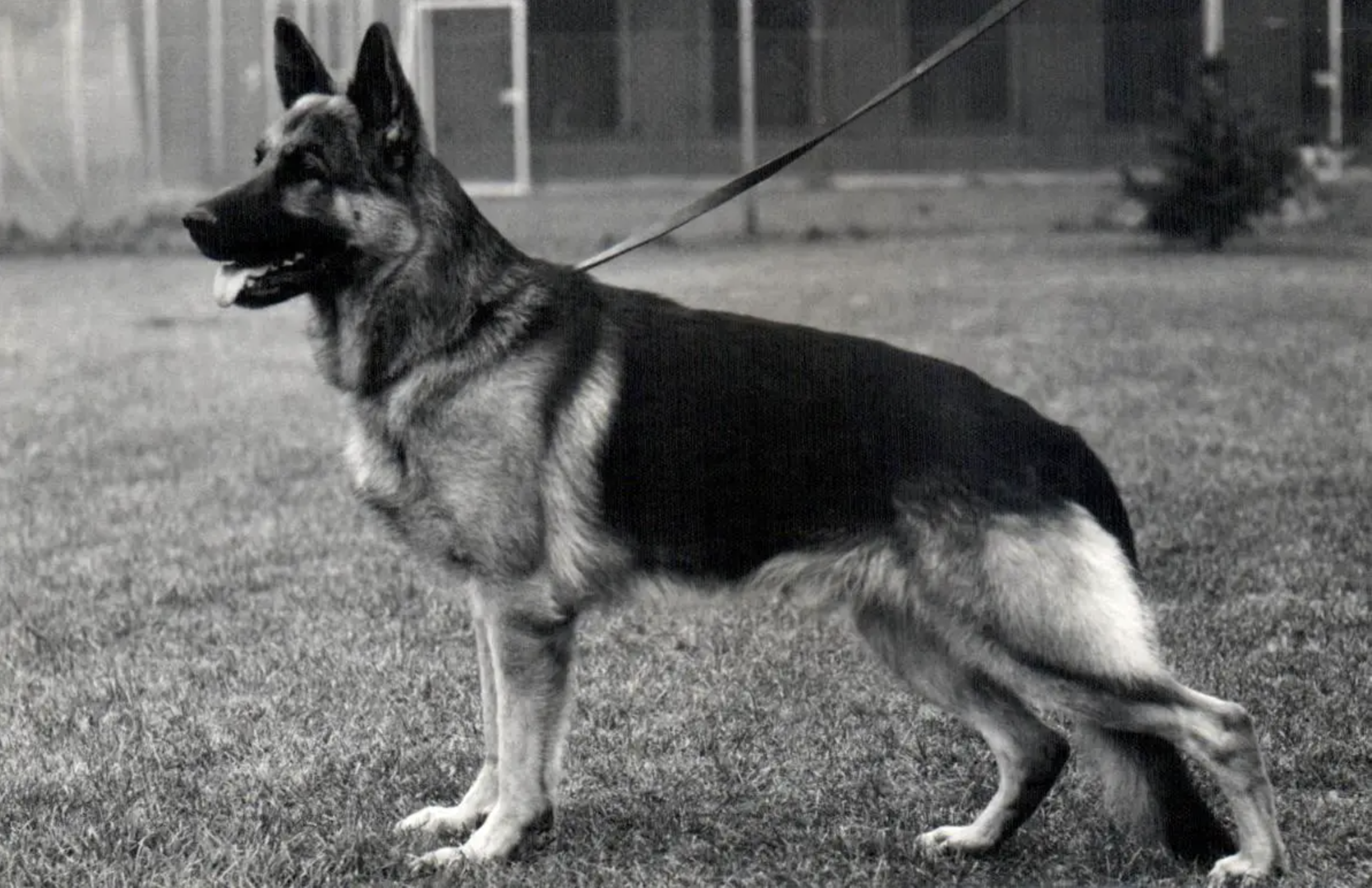
Quanto von der Wienerau
VA2 BSZS SchH3 SZ 1133695
Quanto von der Wienerau was one of the four pillars of modern German Shepherd breeding alongside Mutz von der Pelztierfarm, Canto von der Wienerau, and Marco von Cellerland. Admired for his masculinity, proportions, movement, and temperament, Quanto became an exceptionally influential sire whose descendants helped shape the structure and type of countless German Shepherds worldwide. -
![German Shepherd dog standing on grass, on a leash, facing right.]()
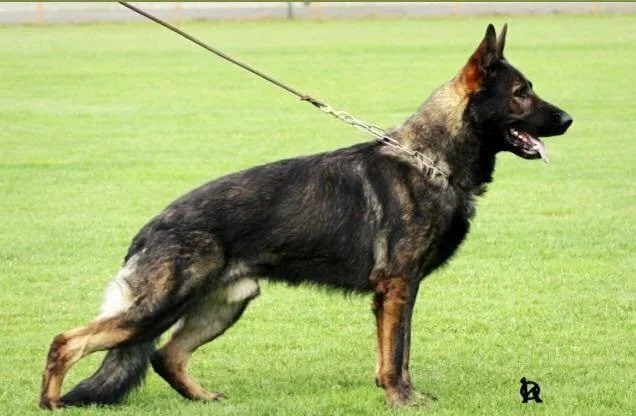
Qvido Vepeden
WUSV World Champion x2, IPO3 CMKU/D 85637/12
Qvido Vepeden was a legendary Czech working-line German Shepherd renowned for his exceptional drive, stability, and work ethic. Handled by Václav Ouška, he became a rare two-time WUSV World Champion in IGP/IPO. Qvido’s genetics heavily influenced police, sport, and protection bloodlines worldwide, producing dogs known for courage, intensity, and reliability. -
![German Shepherd dog standing on grass with a leash attached to its collar.]()
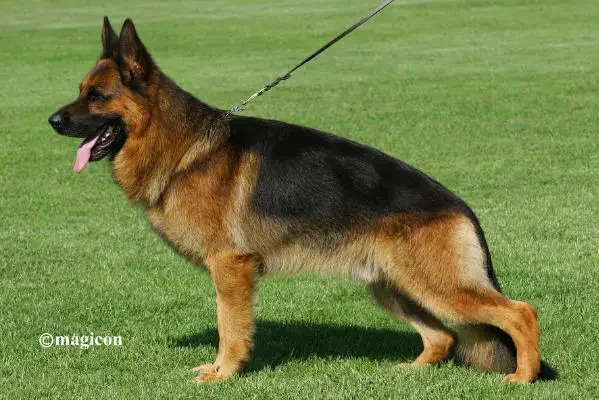
Remo von Flichtenschlag
SchH III IPO3 SZ 2208401
Remo vom Fichtenschlag was one of the most influential modern West German Show Line sires, admired for his balanced structure, sound movement, strong character, and lack of exaggeration. A two-time Sieger (2011–2012), his greatest contribution was his ability to consistently reproduce quality offspring, shaping multiple generations and becoming a cornerstone of the modern German Shepherd breed worldwide.